 UpSkill365
In today’s world, companies must keep changing to stay. One of the ways to do this is by having good corporate training and development programs for employees. These programs help employees learn things to do their jobs better and grow in their careers, which helps the company achieve its goals. When employees get to learn in a way they understand, their jobs are better, they make good decisions, and come up with new ideas that help the company.
Good Corporate Training and Development Programs for Growth also prepare employees for changes in the market, new technology, and new challenges at work. They help employees think ahead, work with others, and be creative. Companies that invest in employee growth see employees work better and be more loyal, which means they stay longer and the company does well.
Training is not a nice thing to have. It’s a key part of a company’s long-term plan. From teaching employees the ropes to helping experienced ones learn new skills, these programs help employees keep growing. By focusing on employee learning, companies get a workforce that’s flexible, motivated, and ready for whatever comes next. Training programs also help fill gaps in skills, so employees stay competitive. Help the company achieve its goals.
Supporting employee development is a direct investment in the organization’s long-term success. Businesses that help their employees grow get an advantage, leading to new ideas, strength, and steady growth that keeps them ahead.
Why corporate training and development programs matter
Companies need to invest in their employees to stay successful and competitive. Corporate training and development programs are not about teaching new skills; it’s about creating a culture where employees feel empowered to do their best and contribute to business goals. Good training programs help employees understand their roles, company goals, and industry trends so they can make decisions and solve problems.
Training helps employees feel more confident and engaged. When workers feel supported in their growth, they make mistakes and contribute more to innovation. This improves performance and overall productivity.
Beyond learning new skills, prioritizing training creates a culture of continuous learning. Companies that invest in training inspire employees to take the initiative, work together effectively, and adapt to challenges. This culture encourages creativity, experimentation, and flexibility. Essential qualities in today’s fast-paced business world. Companies that foster this mindset gain an edge as employees are better prepared to respond to changes in technology, market conditions, and customer expectations.
Ultimately, corporate training is a long-term strategy to ensure employee growth aligns with company needs, fostering resilience, loyalty, and sustained success.
What Makes a Good Training Program
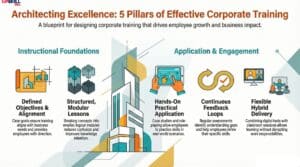
A good corporate training and development programs designed to help employees grow, apply what they learn, and make an impact. Effective programs include elements that enhance learning, retention, and real-world application.
Goals
Every program should start with objectives. Employees need to understand what skills they’ll gain, why it matters, and how it contributes to their work. Defined goals provide direction, increase engagement, and ensure training aligns with business needs.
Organized Lessons
Structured learning breaks down concepts into smaller modules. Each module should build on lessons, creating a logical flow that allows employees to grasp information step by step. Organized content reduces confusion, improves knowledge retention, and encourages learning.
Hands-On Practice
Theory alone is not enough. Exercises, case studies, and role-playing opportunities allow employees to apply what they’ve learned in scenarios. This approach strengthens comprehension, boosts confidence, and ensures learning translates into workplace performance.
Feedback
Regular assessments and feedback sessions help employees understand their strengths and areas for improvement. Continuous feedback ensures training remains relevant, identifies gaps in understanding, and encourages employees to refine their skills.
Flexibility
Modern programs combine classroom sessions with digital tools like e-learning platforms, webinars, and self-paced modules. This hybrid approach allows employees to learn on their schedule without disrupting work responsibilities, making training more accessible and effective.
By incorporating these elements, organizations can design programs that enhance skills and build a culture of learning. Effective corporate training and development programs transform employees into skilled and engaged contributors who drive company success.
Benefits of Learning for Employees
Learning programs have benefits for both employees and companies. Investing in employee training ensures that employees gain skills that help the company.
Some key benefits include:
- Skill Enhancement: Employees learn things and get practical skills that they can use right away. This helps them work better, make mistakes, and become better at handling challenges.
- Teamwork: Training programs help employees work together, communicate well, and solve problems. Employees learn how to share ideas and work towards goals, which makes the company do better.
- Career Growth: Learning programs help employees prepare for roles and leadership positions. By giving staff the skills and knowledge, companies create clear paths for career advancement.
- Higher Engagement: When employees feel supported through learning, they are more motivated, loyal, and productive. Engagement increases when employees see that the company values their growth, leading to a work culture.
- Turnover: Companies that invest in employee growth have lower rates of employees leaving. Providing learning opportunities helps retain talent and fosters loyalty among employees.
In addition to these benefits, learning programs create a workforce that’s adaptable, proactive, and ready to meet changing business demands. Employees become more confident in decision-making, innovative in problem-solving, and capable of contributing to the company’s success.
Ultimately, companies that prioritize employee development not only enhance individual performance but also create a strong, high-performing workforce. This leads to long-term improvements in productivity, innovation, and overall business growth, ensuring that the company remains competitive.
Role of Technology in Employee Development
Technology has changed the way companies do Corporate training and development. Digital tools make learning easier, fun, and tailored to each employee’s needs. Now companies use learning platforms, virtual classrooms, and interactive simulations to give employees a great learning experience.
Some of the technological trends in employee development are:
- E-Learning Platforms: Employees can take courses anytime, anywhere, which makes it easy to fit learning into their schedules.
- Workshops and Webinars: These interactive sessions help teams work together even if they are in different locations and learn from each other.
- Personalized Learning: Artificial intelligence helps recommend courses and content based on how each employee learns, which makes training more effective.
- Gamification: Adding quizzes, challenges, and rewards makes learning fun and engaging.
- Performance Analytics: Tracking progress and looking at outcomes helps companies see if their training programs are working and make changes to improve them.
When companies use technology in development and training, they make sure their employees have the skills they need to do well in a business world that is always changing.
Choosing the Right Training Partner
Picking the partner is a big decision when it comes to corporate training and development . Not all companies that offer training are the same. It is important to choose carefully.
When you are looking for a corporate training and development program company, think about these things:
- Experience and Expertise: Look for companies that have a lot of experience in your industry and know how to make learning corporate training and development Programs
- Customized Solutions: Every company is different, so you need a partner that can tailor their training to meet your needs.
- Innovative Learning Methods: The company should use techniques like digital platforms and blended learning to engage employees and help them learn.
- Outcomes: You want a partner that can track results and show you how their training is impacting performance and productivity.
- Support and Follow-up: A good partner will keep supporting you with coaching and refresher programs to help you keep learning and growing over time.
When you partner with the corporate training and development company, you can be sure that your company is getting the most out of its investment in employee growth and building a workforce that can handle whatever comes next.
Common Challenges and How to Overcome Them
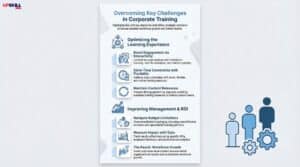
The best corporate training and development programs can face problems if not planned well. Knowing challenges and finding ways to solve them is key to success.
Employee Engagement
Low participation can limit training effectiveness. To fix this, programs should be interactive, include real-life examples, and offer rewards for completion. Employee engagement is crucial, so make sure to boost it.
Time Constraints
Busy schedules can make it hard for employees to find time for training. Offering flexible learning options, like courses or short sessions, helps employees learn without disrupting their work. Time constraints are an issue, so flexible learning is a must.
Budget Limitations
Cost concerns can limit training scope. Working with a training company can help design affordable programs that deliver results. Budget limitations are common, so find a partner.
Measuring Impact
Without metrics, it’s hard to evaluate training effectiveness. Using performance analytics, feedback surveys, and skill assessments ensures learning objectives are met. Measuring impact is vital, so use the tools.
Keeping Content Relevant
Content can reduce engagement. Regularly updating training materials ensures employees gain skills aligned with industry trends. Keeping content relevant is essential, so update it often.
By addressing these challenges, organizations can ensure that development and training initiatives deliver results and create a capable workforce.
Future Trends in Workplace Learning
Employee training methods are evolving rapidly to meet modern business demands. They are trying things to get their employees ready for what is coming next. If companies understand what is happening now, they can stay ahead of the game. Make sure their employees are happy, have the skills they need, and can help the company grow.
Personalized Learning
Employees like it when they get training that’s just for them. This means they get to learn what they want, how they want, and when they want. Computers can help figure out what courses they should take, how they are doing, and make sure the work is not too hard or too easy. This way of learning is better because employees can focus on what they need to learn. They will be more interested. Will remember what they learned. They will not have to waste time on things they already know.
Continuous Skill Development
Just having a one-day workshop, companies are making sure their employees keep learning all the time. They can take classes, refresh what they already know, and get help when they need it. This is really important because things are changing fast in the business world. If employees keep learning, they can keep up with technology, new ways of doing things, and what is happening in their industry.
Blended Learning Approaches
Companies are using a mix of in-person classes and online learning. This way, employees can learn in the way that’s best for them. They can take classes at home or in the office. This makes it easier for everyone to learn and use what they learned at work.
Gamification and Engagement Tools
Making learning fun is an idea. Companies are using games, quizzes, and contests to make learning more enjoyable. This makes employees want to learn more. They will remember what they learned. It is like a competition, but it is fun.
Data-Driven Decisions
Companies can now use tools to see if their training is working. They can track how well their employees are doing and make decisions about what to do next. This means they can use their money wisely and make sure their employees get the training possible.
If companies follow these trends, they can build a strong team of employees who can adapt to change, have the skills they need, and are motivated to do their best. This will help the company grow and be successful in the long run. Future Trends in Workplace Learning, like Continuous Skill Development and Personalized Learning, are really important for companies to pay attention to.
Measuring corporate training and developmentEffectiveness
To make sure that corporate training and development Programs are really working, we need to measure how well they are doing. This means checking if employees are learning what they are supposed to, using what they learned on the job, and if the training is actually helping the company do better. Measuring Training Effectiveness is important because it helps us see if the money we spent on training was worth it. It also helps us find ways to make future training better. Measuring Training Effectiveness is crucial for Corporate training and development programs.
Set Clear Objectives
When we start a training program, we need to know what we want to achieve. This could be things like making employees better at skills, helping them get more work done, or getting them to work together better. If we have goals, it is easier to see if we are making progress, if the training is working, and if it is what the company needs. If we know what we are trying to do we can make a plan to check if we are doing it. This ensures all team members are aligned and working toward shared goals.
Collect Employee Feedback
We need to ask employees what they think about the training. We can use surveys, talk to them one-on-one, or have them fill out feedback forms. This helps us see if they liked the training, if there were any problems, and if they thought it was helpful. If we ask employees what they think they will tell us the truth. We can use what they say to make the training better. Collecting Employee Feedback is very important for assessing Training Effectiveness.
Track Performance Metrics
We need to look at things like how much work employees are getting done, if they are making fewer mistakes, if they are finishing projects on time, and if customers are happy. This helps us see if the training is actually making a difference. If we look at these numbers, we can see if the training is not something we do in a classroom, but if it is actually helping the company. Tracking Performance Metrics is essential for measuring Training Effectiveness.
Assess Skill Application
We need to check if employees are using what they learned in the training when they are doing their jobs. We can do this by giving them tests, having their managers watch them, or doing performance reviews. This helps us see if the training is really working or if it is something that sounds good on paper. Assessing Skill Application is critical for measuring Training Effectiveness.
Continuous Improvement
corporate training and development programs should always be. Getting better. We can use what employees tell us, the numbers we look at, and other information to make the training better all the time. This helps us make sure that the training is always relevant and that it is always helping the company. If we always try to make the training better, it will help the company do better. It will help employees grow and do their jobs better. Continuous Improvement is necessary for Training Effectiveness.
By checking if the training is working, we can make sure that our corporate training and development Programs are really helping employees make the company better and helping us succeed in the long run. Measuring Training Effectiveness is essential for the success of Corporate training and development programs.
Conclusion:
Investing in employee growth is crucial for long-term organizational success. Companies that implement corporate training and development programs cultivate a workforce that is skilled, adaptable, and motivated to meet business challenges.
Strategic corporate training and development Programs enhance performance while fostering stronger collaboration, creativity, and innovation across teams. Employees become problem-solvers, leaders, and contributors, which translates into higher productivity, improved customer satisfaction, and a stronger organizational reputation.
In today’s business landscape, organizations that prioritize learning retain top talent and cultivate a culture of excellence. Partnering with providers like Upskill365 ensures that training initiatives are well-designed, effective, and aligned with long-term business objectives. By combining expert guidance, advanced training methods, and ongoing support, companies can empower employees to address skill gaps and unlock their full potential.
Investing in corporate training and development is a win-win: employees gain valuable skills and growth opportunities while organizations achieve sustainable success, innovation, and resilience in an ever-evolving market. Through planning and strategic implementation, corporate training becomes a key driver of organizational excellence and a foundation for future growth.
Frequently Asked Questions
1. What are corporate training and development programs?
Corporate training and development programs are structured learning initiatives designed to improve employee skills, knowledge, and performance. They help employees grow professionally while aligning their capabilities with business goa
2.What types of corporate training are most effective?
The most effective training includes a mix of classroom sessions, e-learning, hands-on practice, and interactive workshops. Blended learning approaches often deliver the best results.
3. How do corporate training programs benefit employees?
Employees gain new skills, improve communication, and become more confident in their roles. Training also opens up career growth opportunities and prepares them for leadership positions.
4.What are corporate training and development programs for employees?
Corporate training and development programs for employees are structured learning initiatives that help improve skills, knowledge, and overall job performance. These programs focus on both technical and soft skills to support employee growth and organizational success.
5. What makes the best corporate training and development programs?
The best corporate training and development programs are goal-oriented, interactive, and tailored to business needs. They include practical learning, continuous feedback, and flexible formats like online and in-person sessions to ensure maximum effectiveness.
6. What are the most popular corporate training topics?
Common corporate training topics include leadership development, communication skills, teamwork, time management, problem-solving, digital skills, and customer service. These topics help employees perform better and adapt to workplace changes.
7. How often should employees undergo corporate training?
Employees should receive training regularly through continuous learning programs, refresher sessions, and skill development workshops to stay competitive and efficient.